
Pillar two · Rewiring
Neuroplasticity & Change
Nothing in you is fixed.
Not your mind. Not what you feel.
Your brain follows what it repeats, and it is still learning.
You already know the pattern.
You can feel it coming.
And somehow, you still end up there.
What neuroplasticity means here
Neuroplasticity is the brain’s ability to change through what you live, and especially through what repeats.
Not in big moments.
In small ones that come back.
A pause where there used to be a reaction.
A breath before the old words.
A different choice. Once. Then again.
None of it feels like change while it’s happening.
It feels small. Almost like nothing.
But the brain keeps track of what you return to.
And slowly, what felt far away starts to feel a little closer.
Why you keep going back to what you already know
You notice it afterwards.
The same reaction. The same words. The same silence.
And part of you thinks, I know better than this.
But knowing doesn’t always reach the body in time.
What you’ve repeated for years starts to feel like home.
Even when it hurts.
Familiar isn’t the same as safe.
To your brain, it often feels that way.
So it takes the road it knows.
Not because you’re weak.
Because that road has been walked so many times, it’s the easiest one to find in the dark.
And every time you notice it, even late, something moves.
The road is still there.
But now you can see it.
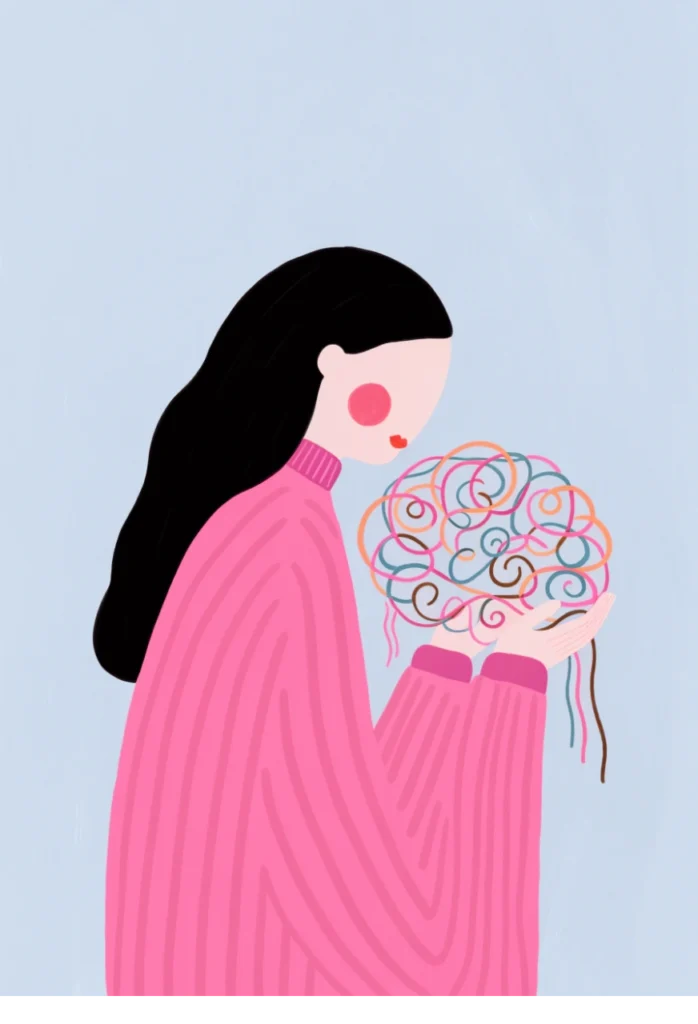
Holding it, before changing it.
Where it shows up
Not a method. Not a plan.
Just the places where an old pattern tends to show itself.
When you understand the pattern, but still repeat it
You can explain exactly why you do it.
Where it started. What it protects.
And still, in the moment, you’re already there.
Understanding comes first. The body takes longer.
When you keep going back to what already ended
You know it’s over.
And still, your mind returns. A message you reread. A version of the story where it worked.
Sometimes it isn’t about the person. It’s about the road your heart already knows.
When your body is tired, but your mind won’t stop
The day is over.
Your body is heavy. Your thoughts keep going.
A mind that has stayed alert for too long doesn’t always know how to stop.
When everything starts to feel like a sign
A song. A number. A word someone says.
Your mind keeps looking for an answer it can hold.
When nothing is clear, the brain reaches for patterns. Even ones that aren’t there.
What the research says
In one study, adults spent three months learning to juggle.
Brain scans showed changes in the areas that process movement.
When they stopped practising, part of that change faded.
The brain grows toward what you ask of it again. And lets go of what you stop returning to.
Research on how habits form followed people as they tried to build one small daily habit.
On average, it took around 66 days to start feeling automatic.
For some, 18 days. For others, more than 200.
And missing a day didn’t undo the process.
Change isn’t a moment. It’s a return.
The neuroplasticity library
Pieces about old patterns, slow change, and what happens in between.
Read them in any order.

When There’s No Clarity, Everything Starts to Feel Like a Sign

Why Am I So Tired But Can’t Sleep?

How Neuroplasticity Works
Questions you might be carrying
When it isn’t only the mind
Sometimes the pattern isn’t a thought.
It’s a feeling you haven’t found words for yet.
Something that arrives before you understand it.
For when you feel something before you know what it is.
For the tension that stays, even when nothing is wrong.

Before you go
Nothing about you is finished.
Not the way you react. Not the way you feel.
Some days you’ll take the old road.
Some days you’ll notice it a little sooner.
Both count.
The noticing is already the change.
M.B.